

Learn about the private IP address 10.24.1.53, its role in networking, how it functions, where it is used, and troubleshooting tips to resolve issues efficiently.
Understanding 10.24.1.53: Role, Usage, and Importance in Networking
When I first saw the IP address 10.24.1.53, I assumed that it was just a set of numbers that my router had assigned to my laptop. But when I read about the role of private IP addresses in computer networking, I realized these addresses play an important role in communication between devices in homes, offices, and the corporate environment.
Devices require unique identification in networks today. Devices like mobiles, printers, laptops, or cameras, or even smart TVs, use IP addresses. Public IP addresses are needed to connect devices to the internet; private IP addresses, such as 10.24.1.53, are used in local networks.
Understanding private IP addresses can help you manage your network, troubleshoot any network issues, improve the security of your network, and better understand device communications.
What is 10.24.1.53?
IP address 10.24.1.53 is a private IPv4 address used for local networks (LANs). It is from the private IP address range:
10.0.0.0 to 10.255.255.255
This range is reserved for private networks by the Internet Assigned Numbers Authority (IANA).
Private IP addresses can’t be reached via the Internet. They’re mainly used in:
- Home Wi-Fi networks
- Office networks
- Corporate environments
- School and university systems
- Smart home ecosystems
- Internal servers and databases
I noticed that many routers give devices addresses like 10.24.1.53 to devices using a system called DHCP (Dynamic Host Configuration Protocol).
The Structure of 10.24.1.53
Early on in my learning about networking, I found out that IP addresses are structured.
10.24.1.53 has four parts or octets.
Breakdown of the Address
| Section | Value | Purpose |
| First Octet | 10 | Identifies the private Class A network |
| Second Octet | 24 | Helps define subnet structures |
| Third Octet | 1 | Represents a smaller network segment |
| Fourth Octet | 53 | Identifies the specific device |
The octets range from 0-255.
Routers use this to route data to the appropriate place.
The Role of 10.24.1.53 in Networking
Using the IP address bar, there are other private IP addresses, such as 10.24.1.53, that are assigned in homes, offices, and businesses. Local area networks, also called LANs, provide a network of communication between the computers, printers, and smart devices while keeping the organization’s networking. The following is a description of the way in which 10.24.1.53 functions in a network.
- IP Address Assignment: A router automatically provides private IP addresses to the connected devices. All the devices have been assigned a private IP address within the local network; some of them are 10.24.1.53.
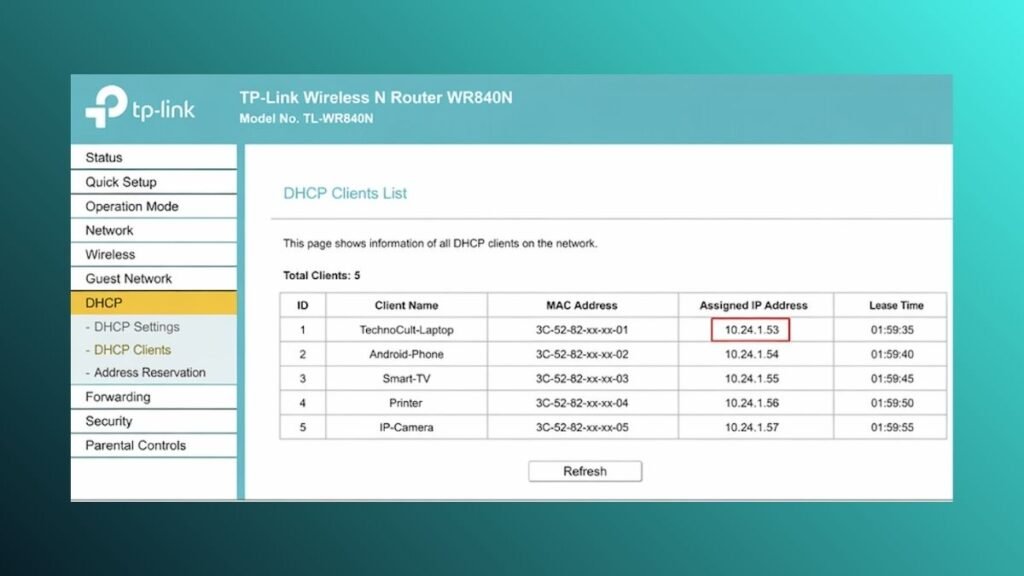
- Communication Within the Network: Every computer within the network is assigned a private IP address, so they are allowed to share files, stream content, and access other shared entities such as printers. For instance, a computing device with an IP address of 10.24.1.53 is in a position to forward a document to a printer with an IP address of 10.24.1.54.
- Internet Access via NAT: Since not all private IP addresses are routable on the Internet, this mechanism assists in this process. A router converts numerous private IPs into a single Public IP, whereby all the devices within a network will be able to browse the internet with security.
Why 10.24.1.53 is a Private IP Address
I’ve had a few questions about this blog post, where I explain that we have private IP addresses beginning with “10”.
And the answer is:
There are blocks of IP addresses that are officially reserved in order to conserve public IPv4 address space.
The private ranges are:
| Private IP Range | Purpose |
| 10.0.0.0 – 10.255.255.255 | Large private networks |
| 172.16.0.0 – 172.31.255.255 | Medium private networks |
| 192.168.0.0 – 192.168.255.255 | Home and small office networks |
So 10.24.1.53 is a private IP address as it is in the first block.
How 10.24.1.53 Works Inside a Network?
I saw on the internet that we’re all connected, but we don’t know how the computers talk to each other.
Let’s have a look at what 10.24.1.53 means.
Device Identification
Each device has a unique part of its local IP address.
For example:
- Laptop → 10.24.1.53
- Printer → 10.24.1.54
- Smart TV → 10.24.1.55
It allows devices to “communicate”.
Internal Communication
The device with the IP address 10.24.1.53 can talk to other devices on the network.
Examples include:
- Sending files to a printer
- Accessing shared folders
- Streaming media across devices
- Using local servers
Internet Access Through NAT
You can’t connect to the internet from your private IP address
This is where Network Address Translation (NAT) comes in handy.
A router translates the private IP addresses of the local area network (LAN) to a public IP address to access the internet.
I personally believe that it is one of the most important technologies in networking because it allows multiple IP addresses to safely access the internet.
Where is 10.24.1.53 Commonly Used?
I found private IP addresses used all over the place. Such IP addresses as 10.24.1.53 are often assigned in various kinds of networks. At Home, there is a tendency for smartphones, tablets, smart TVs, and others to connect with private IPs issued by the router. The internal system of any large business establishment requires the use of private IP addresses to enable secure control of a number of devices. In addition, numerous home automation gadgets, such as smart gadgets like thermostats and security cameras, are built to run in a local network using such IPs for them to interact.
Home Networks
Routers issue addresses like 10.24.1.53 to:
- Smartphones
- Laptops
- Gaming consoles
- Smart TVs
Business Networks
Private IP addresses are used to securely manage a large number of devices for many businesses.
Smart Home Devices
Secondly, I noticed that IoT devices extensively use private IP addresses.
Examples include:
- Security cameras
- Smart thermostats
- Voice assistants
- Smart lighting systems
Internal Servers
Private IPs are also used by businesses for their servers and databases.
The Security Benefits of Private IP Addresses
I have discovered that private IP addresses improve network security.
The internal PC in the local network does not have an accessible IP address, so no one can access it from the Internet.
Benefits Include:
- Reduced external attacks
- Better security of the corporate network
- Safer device communication
- Controlled network access
But private IPs aren’t the only security feature.
I believe router security and firewalls are also important.
Hidden Networking Fact Most Articles Ignore
I found a method of securing your connection when researching this article that is not covered in many articles.
Private IP Conflicts Can Cause Serious Problems
There will be network issues if two computers on the network have the same IP address.
This can lead to:
- Internet disconnections
- Slow connectivity
- Printer failures
- Device communication issues
I have observed that this is quite common in poorly managed LANs.
Why Businesses Prefer the 10.x.x.x Range
There are plenty of articles about private IP, but not why businesses prefer 10.x.x.x.
I discovered this range supports millions of devices and so is suitable for large organizations.
Large organizations use subnetting to divide networks.
This improves:
- Network organisation
- Traffic management
- Security control
- Scalability
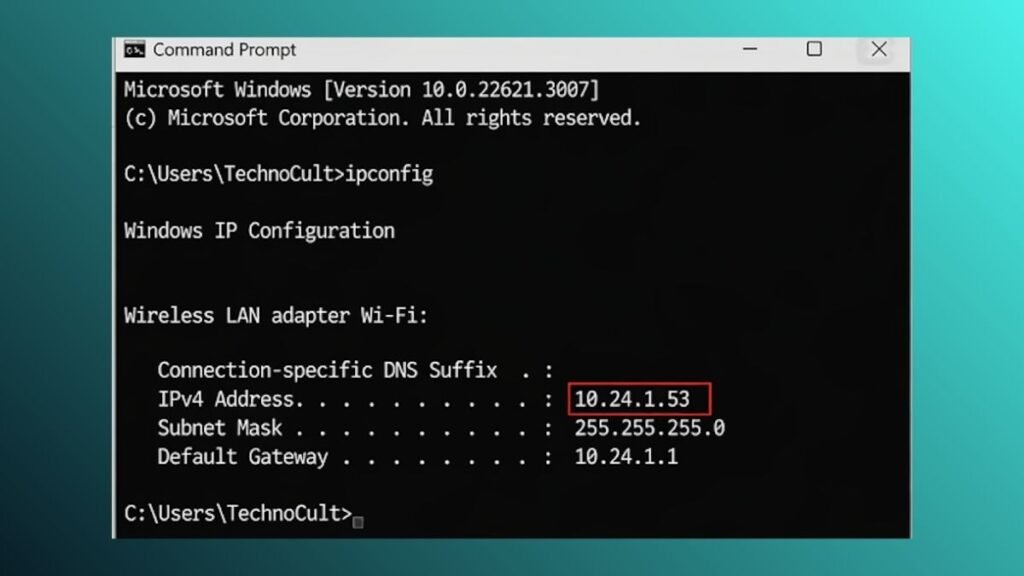
How to Find if Your Device Uses 10.24.1.53
I tested this myself and found it very simple.
On Windows
- Open Command Prompt
- Type: ipconfig
- Look for “IPv4 Address”
On macOS
- Open System Settings
- Go to Network
- Select your active connection
Android or iPhone
- Open Wi-Fi settings
- Tap the connected network
- View IP information
Common Problems Related to 10.24.1.53
I’ve come up with some issues with private IP addresses.
IP Address Conflict – IP address conflicts may interfere with network traffic.
Router Misconfiguration – Misconfigurations of the Dynamic Host Configuration Protocol (DHCP) may cause duplicate IP addresses.
Weak Wi-Fi Signals – Poor Wi-Fi signals can cause devices to not communicate properly.
Firewall Restrictions – Communication between devices may be blocked.
Troubleshooting 10.24.1.53 Issues
Here are solutions if you’re experiencing difficulty with your device on 10.24.1.53.
Restart the Router
This will free up network resources and IP address.
Renew the IP Address
On Windows:
ipconfig /release
ipconfig /renew
Check Network Cabling
A bad connection of the cables may cause a loss of connection.
Verify Router DHCP Settings
Make sure DHCP is enabled properly.
Restart the Device
Reboot to resolve problems.
The Future of Private IP Addresses
I believe private IP addresses will be around for the transition to IPv6.
With the rise of:
- Smart homes
- IoT ecosystems
- Remote work environments
- Cloud-connected offices
local communication will continue to heavily use private IP addresses.
Conclusion
After researching 10.24.1.53, it is more than a random sequence of numbers to me.
Private IP addresses, such as 10.24.1.53, are needed for secure communication on devices in networks. The private IP addresses, like 10.24.1.53, are used for a variety of communications, ranging from your home wireless network to corporate networks.
Private IP addresses will help with networking problems, administration and security awareness.
I hope that once you’ve learned about the use of hidden private IP addresses, networking technology is a little less mysterious and a bit more interesting.
Also Read: 192 L.168.1.1 Router Login: Access, Troubleshooting & Security Guide
Frequently Asked Questions (FAQs)
10.24.1.53 is a private IP address (IPv4) that is used for local network communications.
No, it’s a private IP address and can’t be used to connect to the internet.
No. This will result in conflicts if two computers sharing the same network have the same IP address.
This can be found in your device’s network settings, or using tools like ipconfig (Windows).
Private IPs allow devices to safely communicate and save public IPs.
While private IPs are generally secure, if there is insufficient network security and configuration, vulnerabilities can occur.
About the Author
